The Test That Decides How Long a Georgetown Renovation Actually Takes
October 1, 2026
October 1, 2026
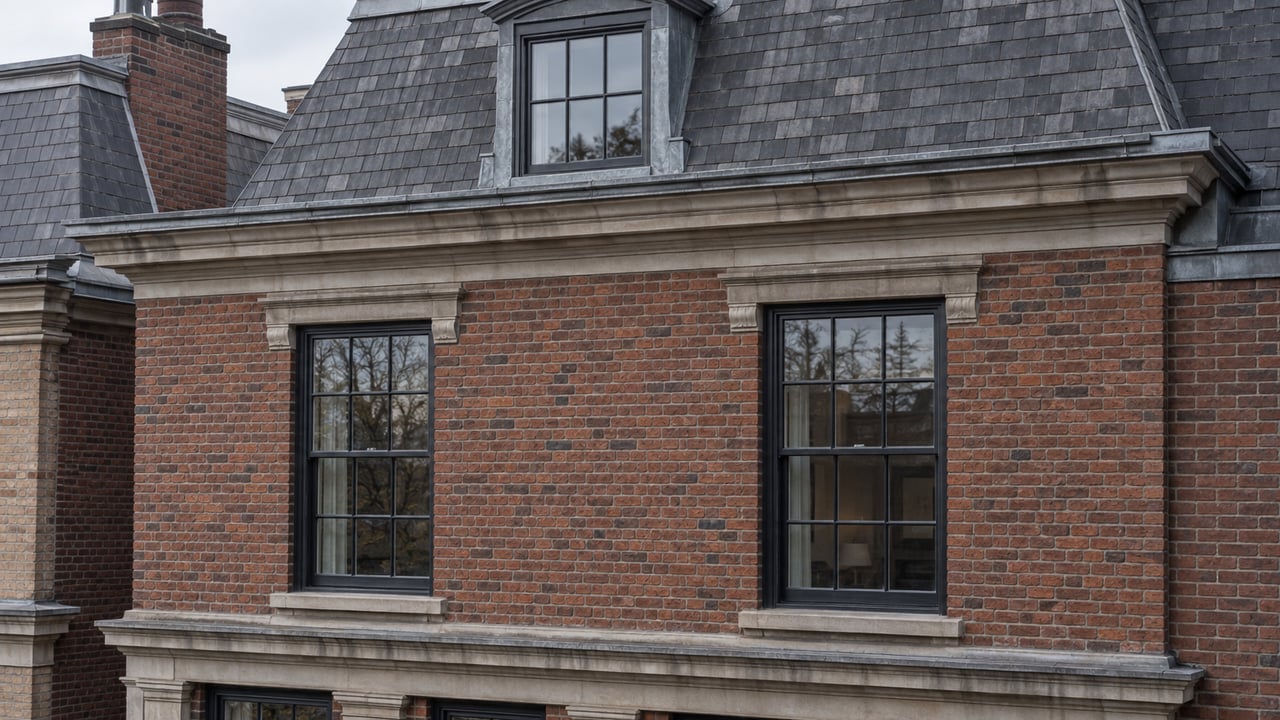
It isn't the size of the project. It isn't the budget. In Georgetown, the single question that decides whether a renovation clears review in weeks or drags on for months is whether the finished work can be seen from a public sidewalk or alley.
That test explains why a full basement addition in Georgetown can sail through with almost no discussion, while a roof replacement gets picked apart down to the gutter profile. Anyone buying a rowhouse here with renovation plans, or a seller trying to finish exterior work before listing, needs to understand which side of that line their project falls on before they set a timeline.
Georgetown carries a layer of oversight most DC neighborhoods don't have. The Old Georgetown Act of 1950 created a federal historic district here and gave the U.S. Commission of Fine Arts authority to review exterior design in the neighborhood. The Commission delegates that review to an advisory committee of architects called the Old Georgetown Board, which meets monthly and sends its recommendations to the full Commission for final action.
The District's own Historic Preservation Review Board still exists and still has jurisdiction citywide, but in Georgetown it mostly stays out of the way. The Old Georgetown Board takes the projects that fall under the federal Act. The Historic Preservation Review Board picks up what's left, which in practice means work that nobody standing on the street can see.
The Commission of Fine Arts is direct about what triggers its review: design review is required for any exterior alteration visible from a public street, sidewalk, or alley, and staff confirm that with an actual site visit rather than a written description of the project. Vegetation doesn't count toward blocking a sightline, so a fence hidden behind mature trees can still be treated as visible if the leaves weren't there to begin with.
Three questions settle most of the confusion before a homeowner ever files:
That last question matters as much as the first two, and it's the one buyers tend to skip entirely.
Earlier this year, a Georgetown homeowner submitted plans for a basement addition. On paper it looked like exactly the kind of project the Old Georgetown Board exists to review: new square footage, new construction, inside the district Congress carved out in 1950. Instead the case came back with almost no discussion. A site visit confirmed the addition wouldn't be visible from the public way, and the file was handed to the Historic Preservation Review Board instead. No design critique, no back and forth on materials. The project simply wasn't the Board's problem.
Compare that to a rooftop replacement the Board reviewed the same year, covering flashing, gutters, and downspouts. That case went through full review, and the Board required the copper panels on the gable pediment to be replaced in kind, along with documentation of the existing gutter type before approval. A rooftop most buyers would assume is invisible from street level turned out to be exactly the kind of thing the Board scrutinizes closely, because rooflines read as part of the streetscape in a way basements never do.
The lesson for anyone evaluating a rowhouse's renovation potential is that scope and budget tell you almost nothing about how long approval will take. Sightline does.
Even a project that clearly needs review moves on a fixed rhythm that has nothing to do with how quickly a buyer wants to break ground. The Old Georgetown Board meets once a month. Its recommendations get compiled into an appendix that goes to the full Commission roughly two weeks later. That two-step structure means a straightforward, uncontested project still needs to clear two separate meeting cycles before a permit can issue, because final Commission action is required before the Department of Buildings will release the permit at all.
Filing deadlines follow the same rigid pattern. For the Board's May 2026 meeting, the filing deadline fell three weeks ahead of the meeting itself. Miss a deadline like that and the next opportunity is an entire month away. For a seller trying to finish visible exterior work before putting a house on the market, or a buyer hoping to close and start renovating quickly, that monthly cadence is often the single biggest variable in the whole timeline, and it's rarely mentioned in a listing description.
There's a useful shelf life to keep in mind too. Concept approval from the Board expires after two years, and permit approval expires after four. A buyer touring a house with an old, unused approval letter in the file should ask when that clock started running, because it may have already expired by closing.
The Old Georgetown Board and the Commission aren't the only voices in the room. The Foundation for the Preservation of Historic Georgetown was founded in 1965, specifically because the original Act didn't carry enough enforcement teeth on its own, and it now holds preservation easements on 114 properties in the neighborhood as of this spring. The Foundation has no formal approval authority, but it shapes the conversation around any project, especially one near a property already under easement.
Georgetown's Advisory Neighborhood Commission, ANC 2E, and the Citizens Association of Georgetown also participate actively in the review of proposed work. Neither has veto power over the Board's decision, but both routinely weigh in before a case reaches its meeting, which means the practical review process often starts well before the official filing date.
For a buyer evaluating a Georgetown rowhouse with renovation in mind, the visibility test changes what due diligence should actually look like. A basement dig-out or a rear addition that can't be seen from the street may move through the Historic Preservation Review Board with a lighter touch than the Old Georgetown Act district reputation suggests. A roof deck, new windows, or exterior paint on masonry that's never been painted before, even on a house that otherwise seems move-in ready, can mean months of monthly meeting cycles before a shovel goes in the ground.
For a seller timing a listing around finished improvements, the same clock applies in reverse. Exterior work that needs Board review should be filed with enough runway to clear both the Board's recommendation and the Commission's final action, plus whatever buffer the monthly filing deadline demands, before photos go up.
Either way, the conversation worth having before a contract is signed isn't about square footage. It's about what a person standing on the sidewalk in front of the house can actually see.
Does interior-only renovation need this review? No. Design review by the Old Georgetown Board and Commission of Fine Arts is not required if there are no changes proposed to the exterior of the property.
What if the house has a preservation easement on it? An easement held by an organization like the Foundation for the Preservation of Historic Georgetown adds another party to the conversation before work begins, even though the Foundation itself doesn't hold permitting authority.
Where do I actually file? Applications go to the Historic Preservation Office, which coordinates intake with the Commission of Fine Arts. The office no longer accepts in-person filings, and a submission through the city's separate permitting system isn't automatically forwarded, so a direct filing with the Historic Preservation Office is a separate step that's easy to miss.
Georgetown rewards careful preparation more than most DC neighborhoods, and that starts long before a contractor shows up. If you're weighing a rowhouse purchase with renovation in mind, or timing a sale around exterior work already in progress, Catherine Triantis can help you think through the calendar before you write the offer.
Stay up to date on the latest real estate trends.


Catherine Triantis carefully tailors her efforts to each individual's needs and preferences. Her success may be attributed to her consultative approach and commitment to consistent communication, attention to detail, and support through all phases of prep, strategic planning, and moving.