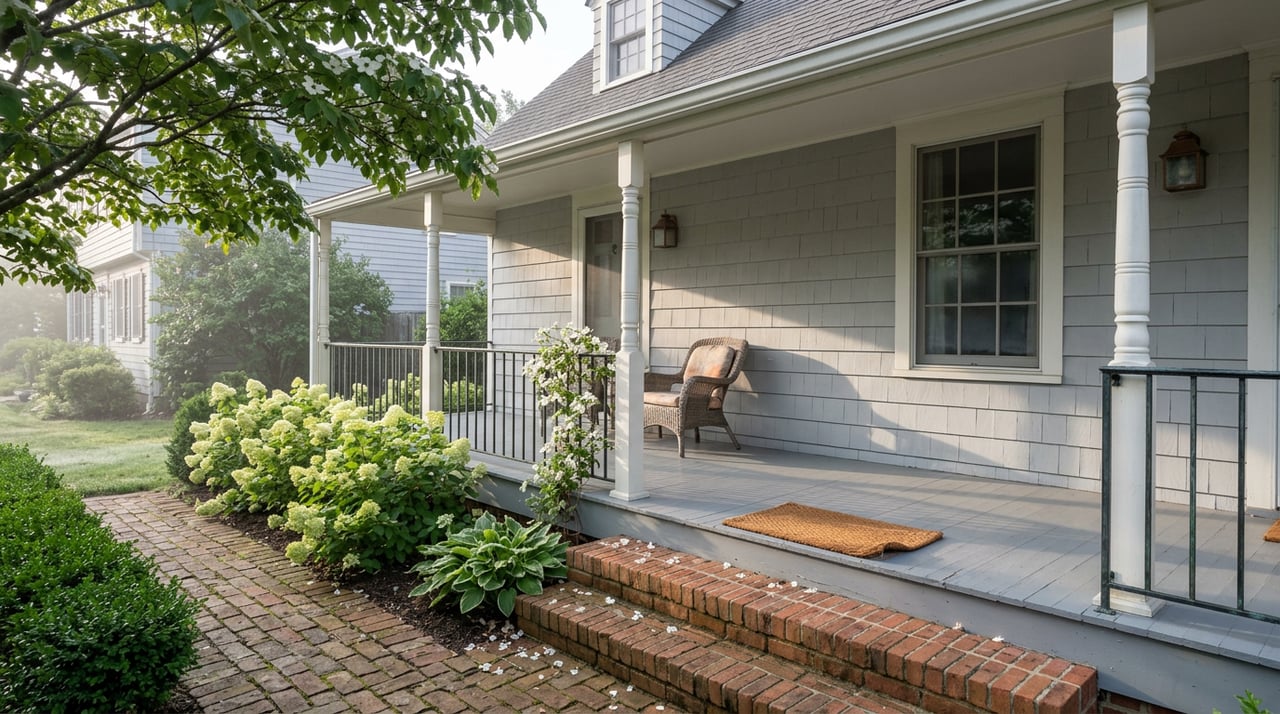
Kensington Canceled Its Book Festival. The Parade Lost Its Building. The Market Never Blinked.
August 27, 2026
August 27, 2026
Most Kensington Saturdays run the same loop. Down to Howard Avenue for the farmers market, across the tracks for a concert in the park, a wander through Antique Row, dinner somewhere on Armory. The loop has worked for so long that nobody thinks about why it works. It just does, every week, whether it is February or August.
This year, two of the three fixed points on that calendar came loose at the same time. The Kensington Day of the Book Festival, a fixture every April for eighteen straight years, is not happening in 2026. The Labor Day Parade is still happening, but the building it has always ended at is now wrapped in construction fencing and will stay that way through most of 2027. Only the market kept its shape. That contrast, not any single closure, is the part worth understanding if you live here.
The Day of the Book Festival has run every spring since roughly 2008, timed to land near the International Day of the Book, filling three blocks of Howard Avenue with authors, poets, small presses, live music and children's programming. It never took a year off, which is part of why its absence registers. At the town's January 2026 council meeting, founder and longtime organizer Elisenda Sola-Sole told the mayor and council she was no longer able to keep running it. The Town of Kensington's own announcement frames it as a pause rather than an ending, and the council plans to weigh the festival's future during 2026 and 2027 budget planning, with an open question about whether the town itself might take over organizing it.
A pause is not a cancellation, and the town's language is careful about that distinction. But an event that ran on one person's sustained effort for eighteen years just demonstrated what happens the moment that person can no longer carry it. There was no backup organizer waiting in the wings. There was no institutional structure absorbing the loss. The festival simply did not happen this April, and whether it returns in 2027 depends on a budget conversation that has not concluded.
The Labor Day Parade is still on the calendar. This year marks the 58th annual running, scheduled for Monday, September 7, starting at 10 a.m. and moving along its traditional route from Plyers Mill Road toward Noyes Library, with a festival on Armory Avenue from 10 a.m. to 2 p.m. featuring food vendors, live music, and the usual mix of marching bands and fire trucks.
What is different is the endpoint itself. The Noyes Library for Young Children, an 1893 cottage that has anchored that corner for generations, closed at 5 p.m. on Thursday, May 21, 2026, for a major renovation. The scope goes well beyond a coat of paint: the plan converts the attic into a finished second floor with staff workspace, renovates the original first-floor library room, and adds a finished basement to hold a programming room. Reopening is anticipated in fall 2027. Until then, the building most families associate with the parade's finish line, and with the small grandstand tucked beside it, sits inside a construction zone.
The practical ripple shows up in two places. Saturday storytime, which used to end with a walk over to the pizza patio at Frankly's, has moved half a mile to Kensington Park Library instead, since Noyes is not available for pickups or programs during the closure. And on parade day, the crowd that has always compressed at the Noyes terminus will likely spread earlier along Armory, since the landmark families used to aim for is no longer open to walk into.
If you are planning where to stand this year, a few things are worth knowing ahead of time:
None of this cancels the parade. It just means a nearly six-decade tradition is running its 2026 edition without the one landmark that used to give it a visual finish line.
Set against those two disruptions, the Kensington Farmers' Market has not missed a beat. It is not a seasonal market that opens in spring and closes with the first frost. It runs every Saturday, year-round, from 9 a.m. to 1 p.m. at the Historic Train Station, 3701 Howard Avenue, the same site it has occupied for years. The Town of Kensington's shopping and dining page lists more than twenty regular vendors, and pulling from the state's own farm directory turns up names like Rabbit Hill Farm for produce and honey, Stonyman Gourmet Farm for farmstead cheeses, and Salt River Lobster for seafood, alongside the antique shops and cafes that line Howard, Armory, and Fawcett along Antique Row.
This year the market is doing a bit more than usual. The town's calendar marks extended-hours Saturdays on August 2, September 6, and October 4, running noon to 4 p.m. in addition to the standard morning market, meaning two separate market rhythms fall on some of the same weekends. Running alongside it, the Kensington Historical Society hosts a free Summer Concert Series at Howard Avenue Park, directly across the street from the market, with a different act each Saturday from 10 to 11 a.m., June through the weekend after Labor Day. An hour-long set is short by design. You can carry a coffee across the tracks, catch the set, and be back at your car before parking turns unpleasant.
The pattern underneath all three of these facts is not really about books or parades or produce. It is about what kind of institution can absorb a disruption and what kind cannot. The book festival depended on one person's sustained, unpaid effort for eighteen years, and the moment that effort stopped, there was no institutional layer underneath it to catch the fall. The parade depends on a building that the town does not control on any set schedule, and when that building needed a two-year renovation, the parade had to adjust its shape around the construction fence rather than the other way around.
The market depends on neither. It is not tied to a single organizer's availability, and it does not need a landmark building to open its gates, because the Historic Train Station has never needed anything more than the same Saturday morning it has always kept. That is not a small distinction if you actually live here and plan your weekends around these institutions. It means the market is the one piece of Kensington's civic calendar that residents can treat as a genuine constant, while the parade and the festival, however beloved, both turn out to be more fragile than their long track records suggested.
None of this changes anything about Kensington as a place to live day to day. The antique shops are still there. The concerts still happen. The market is, if anything, busier this year with two schedules overlapping on the same Saturdays. But if you have spent years assuming Kensington's traditions run on their own momentum, this is the year that assumption gets tested, and the test reveals which ones actually do.
If you already call Kensington home and find yourself thinking about what comes next for your own household, whether that means more space, less upkeep, or simply a change worth exploring, Catherine Triantis has spent decades helping neighbors across Bethesda, Chevy Chase, and the close-in Maryland suburbs think through exactly that kind of decision with the same attention to detail this town deserves. Let's Connect whenever the timing feels right.
Stay up to date on the latest real estate trends.

Catherine Triantis carefully tailors her efforts to each individual's needs and preferences. Her success may be attributed to her consultative approach and commitment to consistent communication, attention to detail, and support through all phases of prep, strategic planning, and moving.